Why AI's real market does not sit inside the software budget, but inside the labor and services budget - and what that means for a technology services company.
This article is Engineering Journal's summary and commentary on Sequoia Capital's thesis "Services: The New Software" - it is not original research. All data, charts and English quotations in this article belong to Sequoia Capital.
For more than 20 years, the technology industry grew on one familiar model: Software-as-a-Service (SaaS).
Microsoft sells an office suite, Salesforce sells a CRM, Adobe sells design software. Software companies supply the input tool, while people remain the ones who actually do the work and answer for the final result.
But AI is opening up a completely different model.
In its article Services: The New Software, Sequoia Capital makes a striking argument:
The next trillion-dollar company might be a software company that operates as a services company.
- Sequoia Capital · Services: The New Software
In other words, that company would not just sell software for customers to do the work themselves. It would sell the finished work itself.
1. From selling tools to selling outcomes
The difference between SaaS and the new AI generation can be put very simply:
- SaaS - We sell you the best shovel. You pay a monthly fee and dig the hole yourself.
- AI-native service - You pay, and by tomorrow morning the hole is already dug.
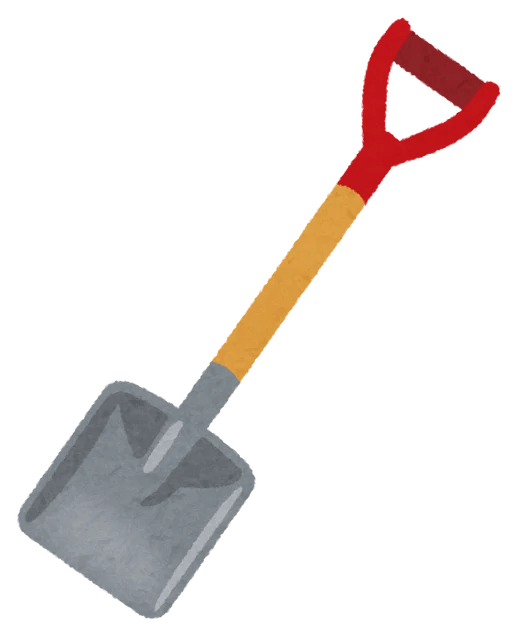

What customers actually need is not another piece of software. They need a problem solved.
So AI is shifting from the role of Copilot to Autopilot:
- Copilot (selling the tool) - Helps people work faster and more effectively.
- Autopilot (selling the work) - Executes most of the workflow and delivers the final result directly.
2. From the software market to the services market
According to Sequoia, for every 1 USD a business spends on software, it spends roughly 6 USD on services.
Software budget versus services budget
The average budget a business allocates to each category.
$1
Software
$6
Services
Source: Sequoia Capital · Services: The New Software.
The market an AI agent can reach is not just the technology budget - it can extend into the entire labor and services budget.
For years, SaaS companies mostly competed for the technology slice of the budget. Meanwhile, a much larger market sits inside the operating budget:
- Consulting
- Accounting & audit
- Recruitment
- Legal services
- BPO & outsourced operations
- IT management & cybersecurity
- Insurance & healthcare claims
AI agents are opening the door for software to enter this market. Instead of just boosting the productivity of service providers, AI can now directly perform a meaningful share of the work that businesses used to hire people or outside partners to handle.
3. Intelligence and judgement: the real dividing line
The original article offers an important framework for answering "how far can AI go". Instead of splitting work by profession, Sequoia splits it by the nature of the task:
- Intelligence (what AI takes over first) - Rule-based work - complex, but still rules. Writing code to a spec, testing, debugging, reconciling numbers, filling out forms.
- Judgement (what people keep) - Decisions based on experience and professional instinct. What to build next, what to prioritize, when to ship.
Writing code is mostly intelligence. Knowing what to build next is judgement. Translating a spec into code, testing, debugging: the rules are complex but they are rules. Judgement is different. It requires experience and taste.
- Sequoia Capital · Services: The New SoftwareFigure 1 - Where is AI being used today?
Which domains are agents being deployed in, measured by share of tool calls. Software engineering is the first profession to cross the threshold, because most of its work is intelligence.
| Domain | % of tool calls |
|---|---|
| Software engineering | 49.7% |
| Back-office automation | 9.1% |
| Other | 7.1% |
| Marketing and copywriting | 4.4% |
| Sales and CRM | 4.3% |
| Finance and accounting | 4.0% |
| Data analysis and BI | 3.5% |
| Academic research | 2.8% |
| Cybersecurity | 2.4% |
| Customer service | 2.2% |
| Gaming and interactive media | 2.1% |
| Document and presentation | 1.9% |
| Education and tutoring | 1.8% |
| E-commerce operations | 1.3% |
| Medicine and healthcare | 1.0% |
| Legal | 0.9% |
| Travel and logistics | 0.8% |
Data: Sequoia Capital, Services: The New Software - "In what domains are agents deployed? (% of tool calls)". Redrawn from the image in the original article; domain names kept as in the original.
Software engineering alone accounts for 49.7% - nearly as much as the other 16 domains combined. Nothing else crosses 10%, and the biggest services markets sit near the bottom: Finance and accounting at 4.0%, Medicine and healthcare at 1.0%, Legal at 0.9%.
What matters is this: software engineering is not special, it simply crossed the threshold first. Once the models are good enough and enough domain-specific data exists, the same pattern will repeat in accounting, insurance, law and healthcare.
And that line keeps moving: today's judgement becomes tomorrow's intelligence.
Figure 2 - Opportunity Map
Plotting every services segment on two axes - intelligence versus judgement, and outsourced versus insourced - produces a priority map, with the labor market size (labor TAM) shown in parentheses.
COPILOT TERRITORY
Hollow dot: leans toward judgement.
Already outsourced but judgement-heavy - people still make the call.
- Management consulting$300B+
- Graphic / UX design$30B+
- Executive search$20B+
- PR & comms$20B+
AUTOPILOT TERRITORY
Filled dot: leans toward intelligence.
Already outsourced and intelligence-heavy - the clearest opportunity.
- Insurance brokerage$140-200B
- IT managed services$100B+
- Payroll & compliance$50-70B
- Claims adjusting$50-80B
- Accounting & audit$50-80B
- Healthcare rev cycle$50-80B
- Mortgage origination$30-50B
- KYC / AML$30-50B
- Paralegal / LPO$36B
- Tax advisory$30-35B
- Legal transactional$20-25B
- Real estate closing$20-25B
- Cost estimation$16B
WATCH
Hollow dot: leans toward judgement.
Insourced and judgement-heavy - worth watching.
- Recruitment$200B+
- Advertising$100B+
- Freight brokerage$100B+
- Admin assistants$80B+
- Clinical trials / CRO$80B+
- SEO / SEM$50B+
- ERP implementation$50B+
- Corporate training$50B+
- Market research$45B
- Cybersecurity$30B+
- Architecture$25B+
- Patent / IP$15-20B
- Travel mgmt$15B+
NEXT WAVE
Filled dot: leans toward intelligence.
Insourced but intelligence-heavy - the next wave.
- Supply chain & procurement$200B+
- Pharmacy back-office$30B+
- Wealth mgmt ops$30B+
- Medical admin$20B+
- Fund administration$15-20B
Redrawn from the Opportunity Map in the original article (the original is a text-heavy screenshot). The four groups above are the four quadrants of that map. The original article notes this list is illustrative. Source: Sequoia Capital.
4. AI starts by replacing workflows, not entire professions
To fully replace a profession, AI would need enough knowledge, experience, judgement and accountability across many different situations.
But to automate a workflow, AI only needs to reliably perform a sequence of tasks with a clear scope, reasonably complete rules and a verifiable result. That is the more realistic starting point.

- Accounting - The profession as a whole needs experience, relationships and accountability for the numbers. Automatable workflow: reading invoices, reconciling transactions, flagging discrepancies, preparing close-of-books data - each step can be handed to a machine.
- Insurance broker - Advising a client still needs experience and judgement. Automatable workflow: gathering information, comparing quotes, filling out forms across multiple carriers - this part is already highly standardized.
- Healthcare staff - Examining and treating patients still needs expertise and judgement. Automatable workflow: converting medical records into ICD-10 codes (roughly 70,000 codes) for insurance billing - complex, but still rule-based.
AI does not necessarily replace an entire profession right away. It starts by taking over workflows with three traits:
- Repetitive and highly standardized - A stable sequence of tasks with few exceptions.
- Measurable results - Right or wrong can be verified, not left to a gut feeling.
- Already outsourced by habit - The business already has the habit of buying the result instead of doing it in-house.
5. From Copilot in 2025 to Autopilot from 2026
| Stage | Dominant model | Strategic question |
|---|---|---|
| 2025 | AI Copilot | How can AI help people work faster? |
| 2026+ | AI Autopilot | How can AI execute and be accountable for a complete workflow? |
If you sell the tool, you're in a race against the model. But if you sell the work, every improvement in the model makes your service faster, cheaper, and harder to compete with.
- Sequoia Capital · Services: The New Software6. From man-month to outcome
This point matters most for technology services companies. The opportunity is not just using AI to cut internal effort - it is redesigning the service delivery model itself:
| Traditional model | AI-native model |
|---|---|
| Sell a QA team | Sell verified releases |
| Sell cloud-ops staff | Sell an SLA, performance and a cost target |
| Sell a SOC analyst | Sell detection and response time |
| Sell a legacy-maintenance team | Sell modules analyzed, migrated and accepted |
| Sell developers by the month | Sell a finished feature or workflow |
At that point, AI is no longer just a productivity tool. It becomes part of the production model and the revenue model itself.
7. Autopilot does not mean removing people entirely
The gap between an AI demo and an AI service that can actually be sold comes down to one thing: being accountable for the result.
For a customer to buy a workflow instead of a piece of software, the provider has to solve for:
- Output quality and SLAs
- Data security and privacy
- Verifiability, traceability and audit
- Risk governance and accountability when something goes wrong
- Human-in-the-loop at the points that need experience and judgement
- The economics of the entire operating process

The workable model in this early stage is probably not "AI fully replaces people" - it is AI doing the intelligence-heavy part while people keep control of the judgement-heavy part.
The core insight
The next AI race is not only about who owns the smartest LLM or the most natural-sounding chatbot.
The durable advantage will belong to the business that combines AI, domain-specific data, workflow, verification mechanisms and operational capability to be accountable for a complete result.
- SaaS - sells the tool so the customer can do the work.
- AI-native services - sells that same work directly.
And the strategic question for every business right now is not only:
How much can AI boost our people's productivity?
But also:
Which workflow can we package, guarantee the quality of, and sell directly as an outcome?
That may be the door from the "1 USD" software market into the "6 USD" services market that Sequoia is pointing to.
This article is a summary and commentary, not original research. All data, charts and English quotations belong to Sequoia Capital; the two charts (Figure 1 and the Opportunity Map) were redrawn from screenshots in the original article, with the figures kept unchanged. The illustrations are artwork by いらすとや (irasutoya), used under its terms of use.